Quepos: Kayak Tour in the Mangroves Near Manuel Antonio Park
5.0(53)
From
View Details$65
Caño Negro Rivers and Lagoons Bird, Flora and Fauna Tour
Discover Costa Rica’s Wild Wetlands by Boat
Imagine drifting quietly along the calm waters of the Río Frío while the sounds of tropical birds surround you. Ahead, a roseate spoonbill moves through the shallows. A caiman rests almost motionless near the riverbank. Somewhere in the forest, a troop of howler monkeys breaks the peaceful silence, while sunlight reflects across the lagoons of one of Costa Rica’s most remarkable wetland ecosystems.
This is the experience waiting for you on the Caño Negro Rivers and Lagoons Bird, Flora and Fauna Tour, an immersive wildlife adventure through the Caño Negro Wildlife Refuge in northern Costa Rica.
Rather than simply visiting a protected area and hoping to see wildlife from a distance, this boat safari places you directly within the natural environment where birds, reptiles, mammals, aquatic life, and tropical vegetation thrive. With the assistance of a bilingual professional guide, you can explore the Río Frío and Caño Negro lagoons while learning how this extraordinary wetland supports an exceptional concentration of wildlife.
Caño Negro is located in Costa Rica’s northern Alajuela Province, close to the Nicaraguan border. The refuge encompasses approximately 9,969 hectares and was designated a Ramsar Wetland of International Importance in 1991 because of its ecological value, particularly as habitat for waterbirds.
For travelers searching for a Caño Negro boat tour, Costa Rica wildlife tour, birdwatching tour in Caño Negro, or an authentic Costa Rica nature experience, this excursion offers a remarkable opportunity to slow down, look closely, and experience the wild side of the country from the water.
The experience is peaceful, educational, photographic, and genuinely adventurous without requiring strenuous hiking. Every bend of the river can reveal something new.
And that is what makes Caño Negro so special: you never quite know what you are going to see next.
Costa Rica is famous for cloud forests, volcanoes, beaches, waterfalls, and rainforests. Yet some of its most fascinating wildlife experiences take place in a landscape that is quieter and more open: the wetlands.
Caño Negro is a freshwater wetland system shaped by rivers, lagoons, seasonally flooded areas, marshes, and tropical forests. The Río Frío plays a central role in the ecosystem, feeding the lagoon system and creating waterways that provide habitat and feeding areas for an extraordinary variety of wildlife.
According to Costa Rica’s National System of Conservation Areas, the Caño Negro Wildlife Refuge contains a network of lagoons and channels surrounded by wetland vegetation, forests, and areas influenced by both Caribbean and Pacific plant communities.
The result is a landscape that feels completely different from Costa Rica’s better-known mountain destinations.
There are no dramatic mountain climbs required here.
Instead, the adventure unfolds at water level.
You glide through tranquil waterways while your guide watches the vegetation, branches, muddy banks, open water, and distant treetops for movement. Wildlife can be surprisingly close, yet the experience remains calm and respectful of the natural environment.
For photographers, the constantly changing scenery creates an endless collection of subjects.
For birdwatchers, every quiet stretch of water can become a viewing opportunity.
For families, couples, and first-time wildlife travelers, the boat provides a comfortable way to experience nature without committing to a demanding trek.
And for experienced nature enthusiasts, Caño Negro offers access to one of Costa Rica’s most productive wetland habitats.
One of the defining features of this destination is its international ecological importance.
The Caño Negro Wildlife Refuge was designated a Ramsar Site on December 27, 1991, recognizing the wetland as an area of international importance. The official Ramsar information describes Caño Negro as a shallow freshwater lagoon near the Nicaraguan border surrounded by seasonally inundated marshes and woodland, forming part of an important network of wetlands used by breeding and migratory waterbirds.
This designation is more than a label.
It helps explain why a relatively peaceful boat ride through Caño Negro can reveal such an impressive concentration of wildlife.
Wetlands are among the planet’s most productive ecosystems. They provide food, shelter, breeding areas, and migration stopovers for countless species. In Caño Negro, seasonal changes in water levels influence where wildlife gathers and how the landscape transforms throughout the year.
The refuge is also connected to the wider cultural and ecological identity of northern Costa Rica. The Maleku Indigenous communities have deep historical connections with the region, and the area known as the Llanura de los Guatusos reflects this heritage. SINAC notes that the Maleku people have inhabited the region for thousands of years and continue to preserve their language, culture, and traditions.
As you travel through the wetlands, you are therefore experiencing more than a scenic landscape.
You are entering an environment shaped by water, wildlife, local communities, conservation, and centuries of human interaction with nature.
The heart of this experience is the boat safari.
Instead of walking long distances through dense vegetation, you travel along the waterways of the Río Frío and Caño Negro lagoon system. This allows you to cover different habitats while maintaining a comfortable pace that is ideal for wildlife observation.
The boat becomes your moving observation platform.
As the vessel travels through the river, your bilingual professional guide helps you search for wildlife that might otherwise be easy to overlook.
A branch may contain a well-camouflaged bird.
A movement along the riverbank may reveal a reptile.
A distant splash may indicate activity beneath the water.
A dark shape in the vegetation could turn out to be a sloth.
And above the open water, large birds can appear suddenly against the sky.
The experience is not about rushing from one attraction to another.
It is about paying attention.
Your guide can help explain what you are seeing, identify animals and birds, point out interesting vegetation, and help you understand the ecological relationships that make the wetlands so productive.
The tour information specifically highlights the opportunity to observe roseate spoonbills, tiger herons, jabirú, anhinga-type birds, sloths, monkeys, caimans, crocodiles, and other wildlife, with the possibility of exceptionally rare sightings such as a jaguar.
Wildlife encounters are naturally unpredictable, which is part of the excitement.
No responsible wildlife tour can promise that a specific animal will appear on a particular day.
Instead, the value lies in entering the habitat with an experienced guide and having the opportunity to observe animals behaving naturally in their environment.
If birds are high on your travel wish list, Caño Negro deserves special attention.
The refuge supports an impressive variety of resident and migratory birds. Official SINAC information lists more than 300 bird species in the refuge, including both resident and migratory species.
The waterways and wetlands provide excellent conditions for waterbirds because they offer access to fish, insects, aquatic organisms, vegetation, and sheltered areas for resting and feeding.
During your boat safari, keep your eyes moving.
Look toward the shoreline.
Look across the lagoon.
Look into the reeds.
Look up toward the trees.
And do not forget to look directly above the boat.
Birdwatching in Caño Negro is often about noticing subtle movement before you understand what you are seeing.
One of the most visually distinctive birds you may encounter is the roseate spoonbill.
Its pink plumage and unusual spoon-shaped bill make it an unforgettable sight against the green and blue landscape of the wetland.
Watching one move slowly through shallow water is very different from seeing a bird in a photograph. The experience becomes even more memorable when your guide explains how the bird feeds and why wetlands are so important to its habitat.
The jabirú is another exceptional bird associated with the wetlands of Caño Negro.
This large stork is particularly impressive because of its size and distinctive appearance. Ramsar information identifies the jabirú among the species supported by the Caño Negro wetland ecosystem.
For birdwatchers, encountering a jabirú can become one of the defining moments of the excursion.
You may see it standing quietly near the water, moving through wetland habitat, or soaring above the landscape.
The wetlands also provide habitat for various herons and other water-associated species.
Their patient hunting behavior makes them fascinating subjects for wildlife photography.
A heron may stand almost completely still before suddenly striking into the water.
These quiet moments are exactly why a boat safari works so well.
You are not simply passing through.
You have time to observe.
The wetland environment also supports birds adapted to life around water.
Anhingas and other aquatic species may be encountered around the rivers and lagoons, adding another layer of diversity to the birdwatching experience.
For serious birders, carrying binoculars is highly recommended.
For casual travelers, a smartphone with a charged battery can still capture memorable moments when wildlife comes within comfortable viewing distance.
Although Caño Negro is famous among birdwatchers, this is far from being a bird-only experience.
The wetlands are home to reptiles, mammals, fish, amphibians, insects, and countless forms of plant life.
This diversity is one of the reasons the experience appeals to such a broad range of travelers.
You might arrive primarily interested in birds and leave talking about monkeys.
You might hope to see a crocodilian and become fascinated by wetland vegetation.
You might come for photography and discover that the most memorable part of the experience was simply drifting through a quiet lagoon surrounded by wilderness.
That unpredictability is one of the defining characteristics of wildlife tourism.
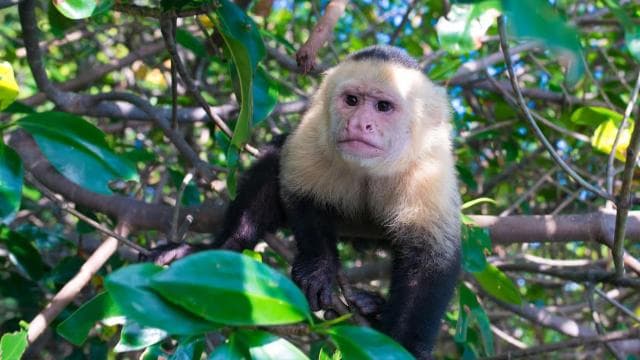
The surrounding vegetation provides habitat for several monkey species.
Howler monkeys are particularly memorable because they can often be detected by sound before they are seen.
Their powerful calls can travel across the wetland, creating an unmistakable tropical atmosphere.
Other monkey species may also appear depending on the conditions and location.
A guide who knows the area can make a major difference here.
Instead of simply seeing movement in the trees, you can learn which species you are observing, what they are doing, and how they interact with the surrounding ecosystem.
Sloths are another highly sought-after wildlife encounter in Costa Rica.
Because they spend much of their lives in trees and often remain still for long periods, spotting one can be surprisingly challenging without an experienced set of eyes.
During the Caño Negro boat safari, your guide can scan the vegetation along the river and lagoon edges for the distinctive shape of a sloth resting among branches.
When one is found, the entire atmosphere of the boat can change.
Everyone becomes quiet.
Cameras come out.
Binoculars are raised.
And suddenly a seemingly ordinary tree becomes the center of attention.
The waterways of Caño Negro also support crocodilian species.
Caimans can often be seen near the edges of waterways, sometimes partially submerged and sometimes resting along the bank.
The official SINAC information confirms that crocodilian populations are among the notable wildlife resources of the refuge.
Seeing one in the wild is a very different experience from visiting an enclosure.
The animal is simply there, behaving naturally, while the boat passes at a respectful distance.
Your guide can help you understand how these reptiles fit into the wetland food chain and why maintaining healthy waterways is essential to their survival.
One of the most exciting aspects of a wildlife safari is knowing that something extraordinary could appear.
The tour description highlights the possibility of seeing a jaguar along the banks of the Río Frío and lagoon system.
However, jaguar sightings are naturally rare and should never be treated as guaranteed.
That uncertainty makes the possibility exciting rather than disappointing.
A successful wildlife experience is not measured only by whether you see the rarest animal.
Sometimes the most rewarding encounter is an unexpected bird.
Sometimes it is a family of monkeys.
Sometimes it is a perfectly framed photograph of a caiman beside calm water.
And sometimes it is simply the feeling of being surrounded by nature with no buildings, traffic, or city noise in sight.
The Río Frío is an essential part of the Caño Negro experience.
Its waterways connect important wetland habitats and create natural corridors through which wildlife can move, feed, and seek shelter.
As the boat travels along the river, the scenery continually changes.
One moment you may be surrounded by dense vegetation.
The next, the river opens toward a broader lagoon.
Then the boat enters another quieter section where birds are concentrated along the shoreline.
This changing scenery keeps the experience engaging without requiring constant activity.
The river itself becomes part of the attraction.
You can watch reflections move across the surface.
You can observe clouds changing shape above the wetland.
You can hear birds calling from hidden areas of vegetation.
You can feel the breeze moving across the water.
And you can appreciate how different this side of Costa Rica feels from its busy tourist centers.
For travelers who want to experience Costa Rica beyond the usual highlights, the Río Frío offers a memorable introduction to the country's northern wetlands.
The lagoons of Caño Negro are not static bodies of water.
They are part of a dynamic wetland ecosystem shaped by seasonal rainfall, river flow, and changing water levels.
SINAC explains that the Caño Negro Lagoon receives freshwater from the Río Frío and Río Mónica, while seasonal conditions can dramatically alter the amount of water within the lagoon.
These changes influence wildlife behavior.
During periods when water conditions concentrate fish and other aquatic resources, birds and predators may gather in particular areas.
During other periods, the wetland expands and creates different opportunities for exploration.
This means that the same route can feel different from one visit to another.
Nature does not operate according to a fixed itinerary.
And that is exactly what makes this kind of tour so rewarding.
Bring your camera.
Even if you are not a professional wildlife photographer, Caño Negro offers countless opportunities for beautiful images.
The scenery naturally provides layers of color and texture.
Green vegetation contrasts with dark waterways.
Blue skies reflect across calm lagoons.
Birds add movement and color.
Monkeys create lively moments in the trees.
Caimans provide dramatic wildlife subjects.
And the open landscape allows for wide photographs that capture the scale of the wetland.
For wildlife photography, patience is often more important than expensive equipment.
A smartphone can capture excellent images when wildlife is close enough.
A camera with a telephoto lens can provide more flexibility when animals remain farther away.
Binoculars are also useful because they allow you to observe details without disturbing wildlife.
The best approach is to arrive prepared to watch first and photograph second.
Some of the most meaningful moments happen when you lower the camera and simply observe.
Costa Rica is famous for adventure activities.
Ziplining.
Whitewater rafting.
ATV tours.
Hiking.
Canyoning.
Surfing.
All of these experiences have their place.
But not every traveler wants a physically demanding day.
The Caño Negro boat safari offers a different kind of adventure.
It is an adventure based on discovery rather than adrenaline.
You do not need to climb mountains to experience something extraordinary.
You do not need to run through a jungle.
You do not need to jump into rushing water.
Instead, you sit comfortably aboard a boat and let the landscape reveal itself.
That makes the tour particularly appealing to travelers who want a wildlife experience without strenuous physical activity.
It can also be an excellent complement to a Costa Rica itinerary already filled with hiking and adventure.
After several active days, a peaceful morning on the river can be exactly what you need.
One of the most important elements of a wildlife experience is the guide.
Without local knowledge, you can travel through an extraordinary ecosystem and miss much of what is happening around you.
A professional bilingual guide changes that.
The guide can help identify birds.
Point out movement in vegetation.
Explain animal behavior.
Share information about the ecosystem.
Help you understand the importance of conservation.
And answer questions as the experience unfolds.
The value is not simply in knowing the names of animals.
A good guide helps transform observation into understanding.
You begin to see connections.
Why is this bird standing in that particular area?
Why are certain animals concentrated near the lagoon?
How does seasonal water movement affect the ecosystem?
Why are wetlands so important?
What makes Caño Negro different from other Costa Rican wildlife destinations?
These details turn a boat ride into an educational nature experience.
One of the most powerful aspects of the Caño Negro tour is the sense that you are entering a living system rather than visiting a collection of isolated attractions.
The birds depend on the wetlands.
The reptiles depend on the waterways.
The mammals depend on the forests.
The fish support larger animals.
Plants stabilize and enrich the habitat.
Seasonal water cycles influence everything.
Even the quiet moments have meaning.
A still lagoon is not empty.
A patch of reeds is not simply scenery.
A tree without visible animals may still provide food or shelter.
A muddy riverbank may be an important feeding area.
This is why guided interpretation adds so much value.
You begin to understand that the beauty of Caño Negro comes from relationships between countless parts of the ecosystem.
Many visitors arrive in Costa Rica with a familiar list of destinations in mind.
Arenal Volcano.
Monteverde.
Manuel Antonio.
Tamarindo.
Tortuguero.
But Costa Rica rewards travelers who go beyond the most photographed locations.
Caño Negro offers an opportunity to explore a quieter region of the country where wetlands and wildlife define the landscape.
Located in northern Alajuela Province near the Nicaraguan border, the refuge is part of the northern plains and is closely associated with the communities of Caño Negro and Los Chiles.
Here, nature is not simply an attraction.
It is central to local life.
The community has developed tourism services around the wetland, creating opportunities for visitors to experience the area while supporting local economic activity. SINAC specifically identifies tourism as part of the community’s economy and highlights local services connected to the protected area.
That gives the experience an authentic character that can be difficult to find in heavily developed destinations.
The appeal of this experience comes from the combination of several elements.
You are exploring a protected wetland.
You are traveling by boat.
You have a professional bilingual guide.
You can search for birds, mammals, reptiles, and other wildlife.
You can observe the Río Frío and lagoon landscapes.
You can learn about flora and fauna.
And you can experience one of northern Costa Rica’s most important natural environments at a relaxed pace.
The experience is also flexible in the way wildlife encounters unfold.
A birdwatching trip can become a photography adventure.
A family outing can become a lesson in ecology.
A casual nature excursion can become a memorable wildlife safari.
For couples, it can be a peaceful way to spend time together away from busy tourist areas.
For solo travelers, it provides the reassurance and knowledge of exploring with a professional guide.
For serious birders, it opens the door to a rich wetland habitat.
For anyone who simply loves animals, it offers the possibility of seeing creatures behaving naturally in the wild.
The boat is more than transportation.
It is the ideal platform for exploring a wetland.
From the water, you can access areas that would be difficult to reach on foot.
The boat also allows you to cover more habitat while conserving your energy for observation.
Rather than walking through dense forest searching for small signs of life, you can move gradually along the river and lagoon system while your guide scans both sides of the water.
The result is an experience that feels immersive without being exhausting.
You can sit back.
Listen.
Observe.
Ask questions.
Take photographs.
And let the landscape unfold around you.
The tour information also notes access to bottled water and refreshments, private parking, and restroom facilities, adding practical convenience before and around the excursion.
Your experience includes the core elements needed for a wildlife-focused visit to the wetlands.
The central activity is the guided boat safari through the Río Frío and lagoon system.
This is where most of your wildlife observation opportunities take place.
A bilingual professional guide accompanies the experience, helping you identify wildlife and understand the surrounding environment.
Water and refreshments help keep the experience comfortable while you spend time outdoors.
Private parking is available, adding convenience for travelers arriving by vehicle.
Restroom access is available as part of the experience.
Entrance to the Caño Negro Wildlife Refuge is coordinated as part of the tour arrangements. Because protected-area procedures can change, travelers should follow the instructions provided by the tour operator before arrival.
A little preparation can make a wildlife experience much more enjoyable.
The wetlands can be warm, humid, and exposed to insects and changing weather conditions.
Comfortable clothing is therefore important.
Choose clothes that allow you to move easily and that you do not mind getting dirty.
Closed-toe shoes are recommended.
Biodegradable sunscreen helps protect your skin while being more considerate of the natural environment.
Insect repellent can be especially useful in wetland environments.
A charged smartphone is useful for photographs.
Binoculars can significantly improve your ability to observe birds and wildlife.
If you take medication regularly, bring your personal medication with you.
And keep water available throughout your day.
The goal is simple: arrive prepared so you can concentrate on the experience rather than worrying about what you forgot.
One of the easiest mistakes on a wildlife tour is becoming too focused on finding the next animal.
Instead, slow down.
If your guide points toward a tree, take your time.
If a bird is resting near the water, watch its behavior.
If monkeys appear in the distance, observe how they move through the canopy.
If a caiman is resting along the riverbank, notice how effectively it blends into its surroundings.
Wildlife observation is not always about spectacular action.
Sometimes the most fascinating moments are quiet.
A bird feeding.
A sloth moving slowly.
A monkey grooming another member of its group.
A reptile floating almost completely still.
A flock of birds crossing the sky.
These are the moments that create the feeling of genuinely being in nature.
You do not need to be an expert birder to enjoy Caño Negro.
Beginners can simply enjoy learning to recognize common species.
Families can turn sightings into a fun wildlife challenge.
Photographers can focus on composition and behavior.
Experienced birders can use the opportunity to add species to their personal records.
The guide helps bridge the gap between different experience levels.
If you already know birds well, you can ask detailed questions.
If you are completely new to birdwatching, you can learn how to use binoculars, identify basic bird shapes, and recognize different habitats.
That accessibility is one of the strongest features of a guided nature experience.
There is something deeply different about seeing an animal in its natural habitat.
A photograph can show you what a jaguar looks like.
A documentary can show you how monkeys move through the forest.
A book can explain the importance of wetlands.
But being there creates an emotional connection.
You hear the sounds.
You feel the humidity.
You see the water moving.
You watch the vegetation change.
You notice the birdcalls.
And then, suddenly, an animal appears.
For a moment, everything else disappears.
That is why wildlife travel often creates memories that last long after the vacation ends.
The Caño Negro boat safari is designed around these moments of discovery.
Responsible wildlife observation is essential.
Animals should never be touched, fed, chased, or intentionally disturbed.
The best wildlife encounter is one in which the animal continues behaving naturally.
Your guide helps you understand how to observe without interfering.
Keep your movements calm.
Avoid loud noises when wildlife is nearby.
Use camera equipment responsibly.
Follow instructions from your guide.
And remember that a close encounter is a privilege rather than an entitlement.
The purpose of visiting a protected wetland is not simply to collect photographs.
It is to appreciate the ecosystem and understand why it deserves protection.
If your idea of Costa Rica includes wildlife, nature, photography, and authentic outdoor experiences, Caño Negro deserves a place on your itinerary.
It offers something different from the country's volcanic landscapes and mountain forests.
Here, the scenery is dominated by water.
The horizon opens.
The river becomes your trail.
The boat becomes your viewpoint.
The wildlife becomes the main event.
And the pace becomes slower.
For travelers who want to escape crowded attractions and experience a more peaceful side of Costa Rica, this can be one of the most rewarding additions to a northern Costa Rica itinerary.
The official conservation authorities describe Caño Negro as a major ecotourism destination in northern Costa Rica and emphasize the ecological diversity of its wetlands, lagoons, forests, and wildlife.
Picture arriving at the water while the landscape is still calm.
The boat is ready.
The river stretches ahead.
You step aboard and settle into your seat.
As the boat begins moving, the sounds of the surrounding wetland gradually replace the sounds of everyday life.
Your guide points toward the trees.
A bird appears.
Then another.
You continue along the river.
The vegetation opens.
The lagoon comes into view.
A caiman rests near the edge.
Farther away, birds gather around a shallow area.
You lift your binoculars.
Your guide explains what you are seeing.
The boat continues.
There is no need to hurry.
The wetland sets the pace.
This is Caño Negro.
Not a performance.
Not a staged encounter.
A real ecosystem unfolding naturally around you.
By the end of the tour, you may remember specific animals.
You may remember a particularly beautiful bird.
You may remember a monkey moving through the trees.
You may remember the stillness of the lagoon.
You may remember your guide explaining something you had never known about Costa Rica.
Or you may simply remember the feeling of drifting quietly through a protected wetland while surrounded by wildlife.
Those are the moments that transform a sightseeing excursion into a travel memory.
The Caño Negro Rivers and Lagoons Bird, Flora and Fauna Tour is an invitation to experience Costa Rica through observation, discovery, and connection with nature.
Whether you are a dedicated birdwatcher, wildlife photographer, family traveler, couple, solo explorer, or simply someone who wants to experience a quieter and more authentic side of Costa Rica, this boat safari offers a remarkable way to enter one of the country’s most important wetland environments.
From the waterways of the Río Frío to the peaceful lagoons of Caño Negro, every turn provides another reason to look closer.
Come prepared to slow down.
Come prepared to listen.
Come prepared to watch.
And most importantly, come prepared to discover what the wetlands choose to reveal.
Costa Rica has countless ways to experience nature.
But few are as peaceful and immersive as moving slowly through a protected wetland by boat.
Here, the journey is the attraction.
The river is the trail.
The lagoons are the landscape.
The birds are the soundtrack.
The wildlife is the surprise.
And every moment brings the possibility of another unforgettable encounter.
Book your Caño Negro wildlife experience and discover the Río Frío, Caño Negro lagoons, tropical wetlands, remarkable birdlife, and fascinating fauna of northern Costa Rica from a unique perspective.
Your next wildlife story could begin with a quiet boat ride.
And in Caño Negro, you never know what might appear around the next bend.
The Caño Negro Rivers and Lagoons Bird, Flora and Fauna Tour is designed around one simple idea: give travelers the opportunity to experience Costa Rica’s remarkable wetland wildlife at a natural, comfortable pace.
Rather than moving quickly between attractions, this experience takes you onto the waterways where the landscape itself becomes part of the adventure. The Río Frío and Caño Negro lagoons provide the setting for a guided exploration focused on birds, mammals, reptiles, aquatic life, tropical vegetation, and the ecological relationships that make the refuge so important.
Because wildlife is wild and seasonal conditions can influence animal behavior, the exact sequence and duration of sightings can vary. Your professional bilingual guide adjusts the experience according to weather, water conditions, wildlife activity, and the most interesting opportunities available on the day of your visit.
Your adventure begins at the designated meeting point for the Caño Negro experience.
Private parking and restroom access make arrival convenient, particularly for travelers driving to the area. Before boarding, you can organize your personal belongings, apply biodegradable sunscreen and insect repellent, and make sure your camera or smartphone is ready.
This is also an ideal time to check your binoculars.
Once you are on the water, you may not want to spend valuable wildlife-viewing time searching through your bag.
Wear comfortable closed-toe shoes and clothing that you do not mind getting dirty. Lightweight, breathable clothing is generally suitable for warm tropical conditions, while a light rain layer can be useful when weather conditions are changeable.
Your guide can provide any final instructions before the boat safari begins.
Once preparations are complete, you board the boat and begin the journey into the wetland.
The first moments are often among the most exciting because the surroundings immediately begin to change.
The sounds of roads, buildings, and everyday activity gradually fade.
The river becomes your route.
Trees and wetland vegetation line the waterways.
Bird calls become easier to notice.
The guide begins scanning the surroundings for wildlife.
You may be tempted to immediately look for a spectacular animal, but take a moment to appreciate the landscape itself.
The calm water.
The reflections.
The vegetation.
The changing sky.
The quiet movement of the boat.
These details establish the atmosphere for the rest of the excursion.
The Río Frío provides an important route through the northern wetland ecosystem.
As the boat moves along the river, your guide searches both sides of the waterway.
This is where keeping your attention moving becomes important.
Do not look only at the water.
Look at tree branches.
Look at the shoreline.
Look into open areas.
Look toward the sky.
And listen.
Wildlife can announce itself through movement or sound before it becomes visible.
Your guide may point out a bird that you would otherwise have missed or explain why a particular section of vegetation attracts certain species.
The pace is deliberately suited to observation.
The objective is not simply to travel down the river.
It is to discover what lives beside it.
As the safari continues, you may encounter different forms of wildlife.
Birds are among the most common and rewarding subjects, with opportunities to search for herons, spoonbills, storks, kingfishers, aquatic birds, and other species associated with wetland habitats.
Mammals may also appear.
Monkeys can move through the canopy or announce their presence from a distance.
Sloths may be resting in trees along the river.
Reptiles can sometimes be seen near the water's edge.
Every sighting adds another piece to the story of the ecosystem.
Your guide helps identify the species and provides context about its behavior, habitat, and role in the environment.
As the experience progresses, the landscape can become increasingly open as the boat reaches lagoon areas.
The transition from river to lagoon provides a different perspective.
Open water creates broader views.
Wetland vegetation becomes more visible.
Birds may be easier to observe against the open landscape.
The scenery can also create excellent photography opportunities.
This is a good moment to slow down even further.
The lagoon is not something to rush through.
Watch the water.
Observe the shoreline.
Look for movement.
Listen to the birds.
Your guide will continue searching for wildlife and explaining the environment.
Birdwatching remains one of the major reasons travelers choose this experience.
Caño Negro is internationally recognized for its wetland importance, and the refuge provides habitat for a large variety of resident and migratory birds.
Your guide can help you look for distinctive species such as the roseate spoonbill and jabirú, along with herons and other water-associated birds.
The roseate spoonbill can be particularly striking when viewed against green vegetation and blue water.
Its pink coloration makes it a memorable photography subject.
The jabirú, meanwhile, is impressive because of its size and distinctive appearance.
For travelers who have never participated in a dedicated birdwatching excursion, these encounters can completely change the way they experience nature.
Instead of simply seeing "a bird," you begin noticing behavior, feeding patterns, body shapes, flight patterns, and habitat.
Birds are only part of the story.
Your guide also keeps watch for mammals living around the waterways and surrounding vegetation.
Monkeys may be heard before they are seen.
Sloths may remain high in the trees.
Other mammals can move through the forest or wetland margins without making much noise.
The key is patience.
Wildlife does not perform on demand.
The boat may pause while your guide studies a particular section of forest.
That pause is part of the experience.
It gives you time to look carefully and appreciate how much life can be hidden in what initially appears to be an ordinary patch of vegetation.
The water and shoreline also create opportunities to observe reptiles.
Caimans and other crocodilian species are among the animals associated with the Caño Negro wetland environment.
Seeing one in its natural habitat can be an exciting moment, especially when the animal is partially concealed by vegetation or water.
Your guide can explain how these reptiles interact with the ecosystem and why healthy wetland habitats are essential for maintaining wildlife populations.
Always follow your guide's instructions during wildlife encounters.
The safest and most responsible observation is one that allows animals to remain undisturbed.
Not every section of the tour is about finding an animal.
Some moments are simply about enjoying the scenery.
The Río Frío and Caño Negro lagoons offer a constantly changing combination of water, vegetation, sky, forest edges, and open wetland.
Your guide can help you understand the flora surrounding the waterways and explain how plants contribute to the health of the ecosystem.
For travelers interested in nature photography, these quieter sections can be just as valuable as wildlife sightings.
Wide landscape photographs can capture the atmosphere of the wetlands, while close-up images of vegetation can reveal details that are easy to overlook.
Bottled water and refreshments are included, allowing you to remain comfortable during the experience.
Use quiet periods to stay hydrated and review photographs if you wish.
However, try not to spend the entire tour looking at your phone.
The environment is constantly changing, and the next wildlife encounter may happen when you least expect it.
A good balance is to take photographs when something special appears and then put the camera away so you can experience the moment directly.
After exploring the river and lagoon environments, the boat begins the return portion of the experience.
This is often an excellent time to look again at the landscape.
You may notice details that you missed on the way in.
The light may have changed.
Bird activity may have shifted.
Animals may have moved.
And after spending time on the water, you may begin to recognize familiar sections of the route.
The return journey provides another opportunity for observation rather than simply serving as transportation back to the starting point.
Once the boat safari concludes, you return to the designated area.
You can use the available restroom facilities, collect your belongings, and prepare for the next part of your Costa Rica itinerary.
Before leaving, consider reviewing your photographs while the experience is still fresh.
You may discover that you captured more wildlife than you realized.
More importantly, you will leave with an understanding of a side of Costa Rica that many travelers never experience.
A wildlife excursion becomes significantly more rewarding when you arrive prepared.
You do not need expensive equipment or specialized outdoor skills.
You simply need the right attitude and a few practical items.
Binoculars are one of the most useful items for a Caño Negro wildlife tour.
Some animals will be close enough to observe easily, while others may remain high in trees or farther across the lagoon.
Binoculars allow you to appreciate details without disturbing wildlife.
They are especially valuable for birdwatching.
If you have your own binoculars, bring them.
If you are traveling with children, consider allowing them to use binoculars during the safari. Searching for wildlife can turn the experience into an engaging nature activity rather than passive sightseeing.
Your smartphone can be an excellent wildlife photography tool.
Before leaving your accommodation, make sure the battery is fully charged.
If you have a portable power bank, it can be useful.
The best wildlife moments can happen unexpectedly, and you do not want to miss a photograph because your battery is empty.
Avoid using your phone constantly, though.
Wildlife experiences are best when photography complements observation rather than replacing it.
Closed-toe shoes are recommended for comfort and practicality.
Choose footwear that you can comfortably wear for an outdoor excursion and that you do not mind getting dirty.
Avoid wearing footwear that is difficult to walk in or uncomfortable in warm, humid conditions.
The Caño Negro environment can be warm and humid.
Lightweight, breathable clothing is generally a practical choice.
Choose clothes that can handle outdoor conditions and possible splashes or dirt.
Neutral or natural clothing colors can also be preferable for wildlife observation because they are less visually distracting than extremely bright clothing.
Most importantly, dress for comfort.
You may spend several hours surrounded by tropical nature, so clothing that allows you to relax and move comfortably is more important than dressing formally.
Sun protection is important, especially when spending time on open water.
Choose biodegradable sunscreen when possible.
Apply it before boarding and reapply according to the product's instructions.
Because the tour takes place in a sensitive aquatic environment, environmentally responsible choices are encouraged.
Wetlands naturally attract insects.
Insect repellent can make your experience more comfortable.
Choose a product suitable for outdoor tropical conditions and apply it according to its instructions.
If you are particularly sensitive to insects, consider bringing additional protective clothing such as lightweight long sleeves or trousers.
If you take medication regularly, bring enough for the duration of your outing.
Do not rely on finding a specific medication after you arrive at the destination.
Keeping essential personal medication easily accessible is always a smart travel practice.
Although bottled water and refreshments are included, staying hydrated remains important in warm tropical weather.
Drink regularly rather than waiting until you become thirsty.
The combination of sun, humidity, and outdoor activity can increase fluid requirements even when the tour itself is physically gentle.
You do not need professional equipment to photograph Caño Negro.
You need patience.
Wildlife can disappear quickly.
If you are constantly adjusting settings or moving around, you may miss the moment.
Keep your camera ready when your guide begins scanning a particular area.
A photograph becomes more interesting when it captures behavior rather than simply showing an animal.
A bird feeding.
A monkey climbing.
A sloth resting.
A reptile watching the water.
These moments tell a story.
Do not photograph every animal as a close-up.
Sometimes the best image shows the animal within its environment.
A spoonbill standing beside a lagoon.
A heron framed by vegetation.
A caiman beside the river.
A monkey surrounded by tropical foliage.
These images communicate where you were, not just what you saw.
Wildlife photography rewards patience.
If your guide points out an animal, resist the urge to take dozens of photographs immediately.
Watch first.
The animal may change position.
It may turn toward the camera.
It may begin feeding.
It may interact with another animal.
Often the best photograph comes after the first few seconds.
There are many ways to experience Costa Rica's natural environment, but this tour combines several advantages into one focused wildlife experience.
The tour takes you into the Caño Negro Wildlife Refuge, an internationally recognized wetland environment.
This gives you the opportunity to experience nature in a protected setting rather than a heavily developed attraction.
The boat provides a comfortable way to explore waterways and wetland habitats.
You can cover different areas without long hikes, making the experience accessible to travelers with different activity preferences.
The focus is not limited to one species.
You can search for birds, monkeys, sloths, crocodilians, and other wildlife.
This diversity means every excursion can feel different.
A bilingual professional guide helps transform the experience from a simple boat ride into an educational wildlife safari.
Even when wildlife is temporarily hidden, the scenery remains an important part of the experience.
The river, lagoons, vegetation, and open wetlands provide a beautiful setting throughout the journey.
Caño Negro offers an opportunity to move away from the country's busiest tourist environments and spend meaningful time surrounded by nature.
The Caño Negro wildlife tour is suitable for a wide variety of travelers.
For bird enthusiasts, the wetlands offer a rich environment with numerous resident and migratory species.
Bring binoculars and prepare to spend time observing behavior.
The combination of water, open views, forest edges, birds, reptiles, and mammals creates excellent photographic variety.
The boat format can be a good way for families to experience wildlife without committing to a strenuous hike.
Children can enjoy searching for animals and learning about Costa Rica's ecosystems.
Parents should supervise children closely around the water and follow the guide's instructions.
Couples looking for a peaceful nature experience can enjoy the relaxed pace and scenic surroundings.
It is an opportunity to spend time together away from crowded attractions.
A guided experience provides local knowledge and structure for travelers exploring independently.
Anyone who enjoys ecosystems, conservation, flora, fauna, and outdoor observation can find something rewarding here.
If you want adventure without intense physical activity, a boat safari is an excellent choice.
For many active seniors, the boat-based format can be more comfortable than a long rainforest hike.
There is generally less strenuous walking involved, and much of the experience takes place while seated on the boat.
However, individual mobility and health considerations vary.
Travelers should consider their ability to board and exit the boat and should communicate any relevant mobility needs to the tour provider in advance.
Comfortable footwear, sun protection, insect repellent, and hydration are especially important.
Wildlife tours can be particularly memorable for children because the experience encourages curiosity.
Instead of seeing animals in a zoo, children have the opportunity to search for wildlife in its natural environment.
A bird hidden among branches becomes a discovery.
A monkey moving through the canopy becomes an exciting surprise.
A caiman near the riverbank becomes a lesson about reptiles and ecosystems.
Parents can make the experience even more engaging by encouraging children to keep a simple mental or written wildlife checklist.
However, children should always remain seated or otherwise follow the boat operator's safety instructions.
The wetland is a natural environment, and responsible behavior is essential.
The tour combines direct observation with professional interpretation.
You are not merely told that Caño Negro is important.
You can see the ecosystem in action.
You can observe how birds use shallow water.
You can see how reptiles occupy the waterways.
You can hear monkeys calling through the vegetation.
You can observe the relationship between forest and river.
This creates a form of learning that is much more memorable than reading about wildlife in a guidebook.
For children, the experience can encourage interest in biology and conservation.
For adults, it provides a deeper understanding of Costa Rica's protected areas.
For photographers and birdwatchers, it can improve the ability to recognize species and habitats.
Have your sunscreen, insect repellent, binoculars, phone, medication, and other essentials ready before boarding.
Tropical weather can change quickly.
A light rain layer can be useful.
Do not assume rain automatically ruins a wildlife experience. In many tropical environments, changing weather can create different wildlife and photography opportunities.
Even when the weather is clear, you are traveling by boat.
A waterproof bag or protective pouch for your phone and camera can provide peace of mind.
Avoid carrying unnecessary valuables.
Keep essential belongings in a secure bag that can remain safely with you on the boat.
The guide knows the environment and can often detect wildlife long before an inexperienced visitor does.
When the guide points toward a particular tree or riverbank, look carefully.
Feeding wild animals can change natural behavior and create risks for both animals and people.
Observe wildlife without interacting with it.
Quiet observation increases the chance of seeing wildlife and makes the experience more pleasant for everyone.
Take all personal waste with you and avoid damaging vegetation.
Protected wetlands depend on responsible visitors.
Rain is part of the tropical environment.
Because Caño Negro is a wetland, rainfall is not unusual and does not necessarily mean the wildlife experience is unsuccessful.
Weather conditions can influence animal activity, visibility, and photography.
A rain shower can also transform the scenery.
Leaves become brighter.
Water reflects the changing sky.
The sounds of the forest intensify.
And some wildlife may become more active.
That said, severe weather can affect boat operations.
Safety always takes priority.
If weather conditions become unsuitable, follow instructions from the local operator or guide regarding any changes to the experience.
Travelers should bring practical rain protection when appropriate and protect cameras and electronic devices from water.
Visiting a protected wetland comes with responsibility.
The goal of responsible tourism is to enjoy nature without damaging the environment or changing wildlife behavior.
Watch animals from a respectful distance.
Do not attempt to touch them.
Feeding wildlife can create long-term behavioral problems and may make animals dependent on humans.
Do not remove plants, flowers, shells, or other natural objects.
Everything in the ecosystem has a role.
Your guide understands the local environment and can advise you about appropriate behavior.
Do not leave plastic, food packaging, or other waste behind.
Biodegradable sunscreen and environmentally considerate insect repellent are sensible choices for a water-based wildlife experience.
A protected area can look very different when experienced with someone who knows it intimately.
A local professional guide understands the landscape.
They know where wildlife is commonly observed.
They recognize bird calls.
They understand seasonal changes.
They can interpret animal behavior.
And they can tell you about the importance of conservation in the region.
That knowledge makes the experience more meaningful.
You are not simply passing through a wetland.
You are learning how to see it.
The most memorable travel experiences are not always the most dramatic.
Sometimes they are quiet.
A slow boat ride.
A distant bird call.
A monkey moving through a tree.
A caiman lying beside the river.
The reflection of clouds on the water.
The moment your guide points toward something you would never have noticed alone.
These experiences create a different type of adventure.
They encourage you to slow down and pay attention.
The Caño Negro Rivers and Lagoons Bird, Flora and Fauna Tour is ideal for travelers who want that kind of connection with Costa Rica.
It is an experience built around discovery rather than speed.
Choosing a guided Caño Negro experience offers several practical benefits.
Instead of arriving at the wetlands without knowing where to go or what to look for, you have a planned experience centered around the river and lagoons.
The bilingual guide adds educational value and makes wildlife identification easier.
The core water-based wildlife experience is already incorporated into the tour.
Bottled water and refreshments help keep you comfortable.
Private parking and restroom access make the experience easier to manage before and after the safari.
Entry to the Caño Negro Wildlife Refuge is coordinated as part of the experience, helping travelers navigate the protected-area component of the excursion.
If wildlife is your priority, avoid filling your day with too many unrelated activities.
Give yourself enough time to enjoy the experience without feeling rushed.
The beauty of a Caño Negro boat safari is that you can immerse yourself in one ecosystem rather than constantly changing locations.
After the tour, consider leaving some quiet time in your schedule.
You may want to review photographs, discuss sightings with your travel companions, or simply reflect on the experience.
A wildlife tour deserves more than being treated as another item to check off a vacation list.
You may remember the roseate spoonbill.
You may remember the size of the jabirú.
You may remember a sloth hiding among leaves.
You may remember the sound of howler monkeys.
You may remember a caiman resting beside the water.
You may remember a sudden burst of birds crossing the lagoon.
But there is another possibility.
You may remember the silence.
The quiet movement of the boat.
The feeling of being surrounded by a landscape untouched by the pace of everyday life.
That is often what makes wildlife travel so powerful.
No two wildlife excursions are exactly the same.
The animals move.
The water changes.
The weather changes.
The light changes.
The vegetation changes.
Your experience depends on what nature chooses to reveal.
That uncertainty should be embraced.
Instead of asking, "What animals will I definitely see?" think about the experience as an opportunity to discover what is active in the wetlands on your particular day.
This mindset makes the tour more rewarding.
Every sighting becomes a genuine discovery.
Travelers are drawn to Caño Negro for the abundance of wildlife, the peaceful boat journey, and the opportunity to explore a lesser-known side of Costa Rica.
The combination of knowledgeable guiding and tranquil scenery makes it possible to appreciate the destination at a deeper level.
You are not simply traveling through the wetlands.
You are learning to recognize the signs of life around you.
A distant call.
A movement in the branches.
Ripples on the water.
A silhouette against the sky.
Each detail becomes part of the adventure.
A good tour gives you photographs.
A great tour gives you stories.
The Caño Negro Rivers and Lagoons Bird, Flora and Fauna Tour can give you both.
You can return home with photographs of Costa Rica's remarkable birds and wildlife, but you can also return with a stronger understanding of wetlands and the importance of protecting them.
You may find yourself telling friends about the bird that suddenly appeared.
You may show family members a photograph of a caiman beside the river.
You may remember how quiet the lagoon became when the boat stopped.
And years later, those details can transport you back to Costa Rica.
If you are looking for an authentic Caño Negro boat tour, a Costa Rica wildlife safari, a birdwatching experience in Costa Rica, or a peaceful way to explore the Río Frío and Caño Negro lagoons, this experience offers an unforgettable opportunity to connect with nature.
You will explore a protected wetland by boat, search for remarkable birds and wildlife, learn from a bilingual professional guide, and experience the scenery of northern Costa Rica from the water.
Bring your binoculars.
Charge your camera.
Wear practical clothing.
Prepare for tropical conditions.
And arrive ready to slow down.
Because the best moments in Caño Negro cannot be scheduled.
They have to be discovered.
Book your Caño Negro Rivers and Lagoons Bird, Flora and Fauna Tour and step into one of Costa Rica's most fascinating wetland environments.
Let the Río Frío guide your journey.
Let the lagoons reveal their wildlife.
And let the natural rhythm of Caño Negro become one of the most memorable chapters of your Costa Rica adventure.
The experience is structured as a guided boat safari through the Río Frío and Caño Negro lagoon system. The exact operating duration can vary depending on the selected departure, local conditions, wildlife activity, water levels, and operational arrangements.
Because the experience is focused on wildlife observation rather than a rigid sightseeing schedule, the guide may adjust the pace to maximize opportunities for spotting birds, mammals, reptiles, and other wildlife.
Travelers should allow sufficient time for arrival, preparation, boarding, the boat safari, and returning to the meeting point. For the most accurate operating schedule, confirm the specific departure time and duration when booking.
Caño Negro is known for its rich wetland biodiversity, making it possible to encounter a wide range of birds and other wildlife.
Depending on the season and conditions, you may have opportunities to see roseate spoonbills, jabirú, tiger herons, other waterbirds, monkeys, sloths, caimans, crocodilians, and numerous other species.
The tour description also highlights the possibility of exceptionally rare wildlife encounters, including jaguars.
Wildlife sightings are never guaranteed because animals move freely through their natural habitat. The guide will search for active wildlife and help you identify species when they are spotted.
Yes. Birdwatching is one of the primary attractions of this experience.
Caño Negro is an internationally important wetland and supports a remarkable diversity of resident and migratory birds. The protected area is particularly valuable for waterbirds because its rivers, lagoons, marshes, and surrounding vegetation provide feeding and resting habitat.
The boat format is especially useful for birdwatching because it allows you to move quietly through different wetland environments.
Travelers interested in birdwatching should bring binoculars and a camera or smartphone with sufficient battery power.
A jaguar sighting is possible but extremely rare and cannot be guaranteed.
The tour description identifies the jaguar as one of the exceptional animals that travelers may be lucky enough to encounter.
Wildlife tours operate in natural environments, so sightings depend on animal behavior, weather, habitat conditions, season, and chance.
The best approach is to appreciate every wildlife encounter rather than expecting one particular species.
Even without a jaguar sighting, the opportunity to observe birds, monkeys, sloths, reptiles, and the wetland ecosystem makes the experience worthwhile.
Monkeys and sloths are among the wildlife travelers may encounter around the rivers and lagoons.
Monkeys can sometimes be detected by their calls before they become visible in the trees. Sloths can be more difficult to spot because they often remain still and blend into the vegetation.
An experienced guide can make a significant difference because trained local eyes are often better at detecting animals hidden among branches and foliage.
Sightings remain subject to natural conditions and are not guaranteed.
Yes. Crocodilians are part of the wildlife associated with the Caño Negro wetland ecosystem, and the tour provides opportunities to search for them along the waterways.
They may be partially submerged, resting near the shoreline, or concealed by vegetation.
Your guide can help identify them and explain their role within the ecosystem.
Because these are wild animals, travelers should never attempt to approach, touch, feed, or disturb them.
The provided tour information lists bottled water and refreshments as included, but it does not specify a full lunch.
Travelers should therefore not assume that a complete meal is included unless it is specifically confirmed in their booking details.
If you need lunch during the day, it is advisable to confirm meal arrangements before departure and plan accordingly.
Yes. Bottled water and refreshments are listed among the tour inclusions.
However, travelers should still consider their personal hydration needs, especially during warm and humid conditions.
If you require a particular beverage, dietary item, or additional drink, it is best to plan for that separately.
Comfortable outdoor clothing is recommended.
Choose lightweight, breathable clothes suitable for warm tropical weather. Closed-toe shoes are specifically recommended, and you should wear clothing that can get dirty.
A light rain layer can also be useful because tropical weather can change quickly.
Biodegradable sunscreen and insect repellent are recommended for additional comfort and environmental responsibility.
Avoid wearing delicate clothing or footwear that you would be uncomfortable getting wet or dirty.
Yes. Insect repellent is recommended because Caño Negro is a wetland environment.
Choose an insect repellent appropriate for tropical outdoor conditions and use it according to the product instructions.
Travelers who are particularly sensitive to insects may also want to wear lightweight long sleeves and trousers.
Using biodegradable or environmentally considerate products is preferable when spending time around protected waterways and wildlife habitats.
Binoculars are not mandatory, but they are highly recommended.
Some birds and animals may be close to the boat, while others can remain farther away in trees, vegetation, or across open water.
Binoculars allow you to observe details without getting closer to wildlife.
They are particularly useful for birdwatchers who want to identify species based on size, shape, plumage, behavior, or feeding activity.
Yes. Photography is an excellent way to preserve memories of the experience.
A smartphone can work well when wildlife is relatively close, while a camera with a telephoto lens provides additional flexibility for distant animals.
Make sure your device is fully charged before the tour.
A waterproof pouch or protective bag is also a sensible precaution because you will be traveling by boat.
For the best wildlife photographs, remain patient and follow your guide's instructions rather than attempting to move closer to animals.
The boat safari can be an engaging nature experience for families with children.
Children may enjoy searching for birds, monkeys, sloths, reptiles, and other wildlife while learning about Costa Rica's wetland ecosystems.
Parents or guardians should supervise children throughout the experience and make sure they follow the boat operator's safety instructions.
Because the excursion takes place in a natural environment around water, children should behave calmly and remain attentive to the guide.
The boat-based format can be suitable for many active older travelers because it does not require a long or strenuous hike.
Much of the wildlife observation takes place while seated on the boat.
However, individual mobility varies. Travelers should consider their ability to board and leave the boat comfortably and communicate any mobility requirements in advance.
Comfortable footwear, sun protection, insect repellent, and hydration can make the experience more comfortable.
Rain is a natural part of Costa Rica's tropical environment, particularly in wetland areas.
A light or moderate rain shower does not necessarily prevent wildlife observation. In some situations, changing weather can create interesting scenery and different wildlife activity.
However, severe weather or unsafe water conditions may affect boat operations.
Safety always comes first. If weather conditions become unsuitable, travelers should follow instructions from the professional guide or local operator regarding operational changes.
A lightweight rain jacket or waterproof layer is useful, and cameras and electronic devices should be protected from moisture.
Yes. Restroom access is listed among the tour inclusions.
Because the boat safari takes place in a natural wetland environment, travelers should make use of available facilities before departure when possible.
If you have specific accessibility requirements, confirm the available facilities and arrangements before booking.
Yes. Private parking is listed as part of the experience.
This can be especially convenient for travelers who are driving to the Caño Negro area.
Allow enough time to arrive, park, organize your belongings, and prepare for boarding before the scheduled departure.
The tour information lists an entry ticket to the Caño Negro Wildlife Refuge, with coordination required.
Because protected-area procedures and entrance arrangements can vary, travelers should follow the instructions provided by the tour operator before the experience.
Confirming the meeting point and entry procedure in advance can help ensure a smooth arrival.
Recommended items include comfortable closed-toe shoes, clothing that can get dirty, biodegradable sunscreen, insect repellent, drinks, personal medication, binoculars, and a fully charged smartphone.
A lightweight rain jacket or waterproof layer is also practical in tropical conditions.
A small waterproof bag can help protect electronics and personal belongings while traveling by boat.
Avoid bringing unnecessary valuables.
A professional guided experience provides local knowledge that can dramatically improve wildlife observation.
Your guide can identify birds and animals, recognize movement in vegetation, explain the ecosystem, monitor wildlife behavior, and help you understand the ecological importance of the wetland.
Without local knowledge, many animals can be surprisingly difficult to spot.
The guide also helps you explore responsibly by explaining appropriate behavior around wildlife and protected habitats.
For travelers who want more than a scenic boat ride, the professional interpretation adds significant value.
After completing your reservation, our concierge team will contact you directly via WhatsApp / Email to re-confirm your exact hotel pickup time or meeting point.
If you selected a central meeting point during your booking, please note that your reservation is confirmed — arrive at the scheduled departure time.